Long Put Option
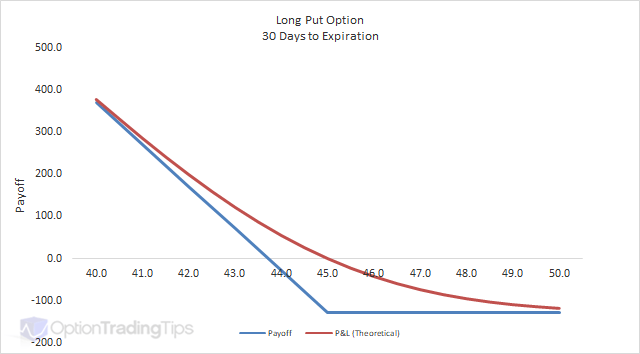
| B/S | Strike | Type | Price |
|---|---|---|---|
| Buy 1 | $45 | Put | $1.29 |
| Net Debit | $129 | ||
A long put is the purchase of a put option.
The Max Loss is limited to the net premium paid for the option.
The Max Gain is uncapped as the market falls but limited to the strike price minus the stock price as the stock cannot trade lower than zero.
Characteristics
When to use: When you are bearish on market direction and bullish on market volatility.
Like the long call a long put is a nice simple way to take a position on market direction without risking everything. Except with a put option you want the market to decrease in value.
Buying put options is a fantastic way to profit from a down turning market without shorting stock. Even though both methods will make money if the market sells off, buying put options can do this with limited risk.
Long Put Option Greeks
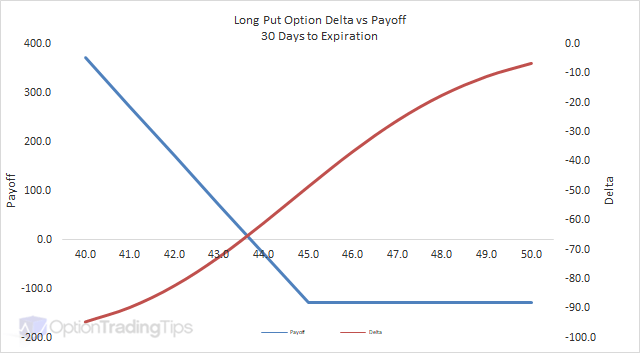
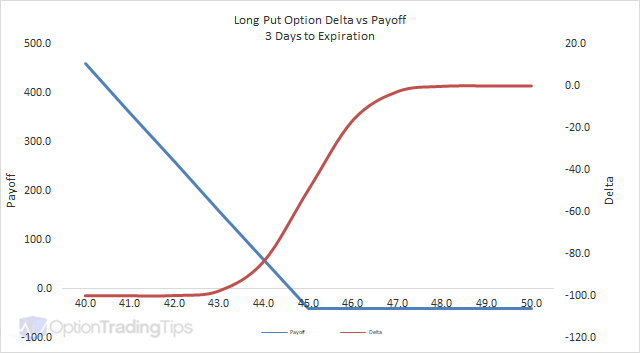
Delta
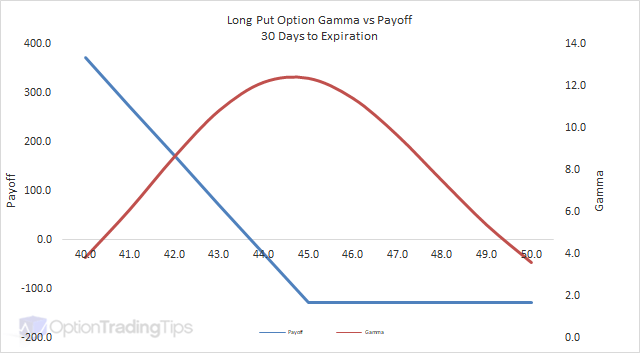
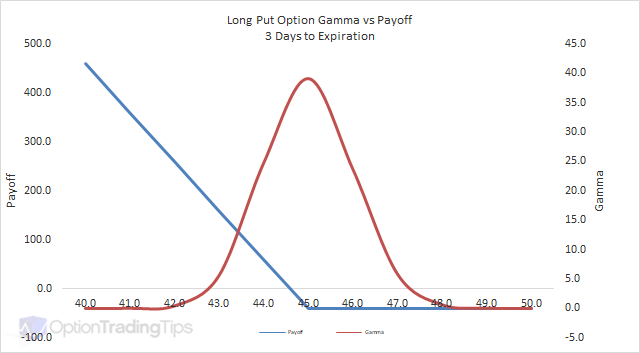
Gamma
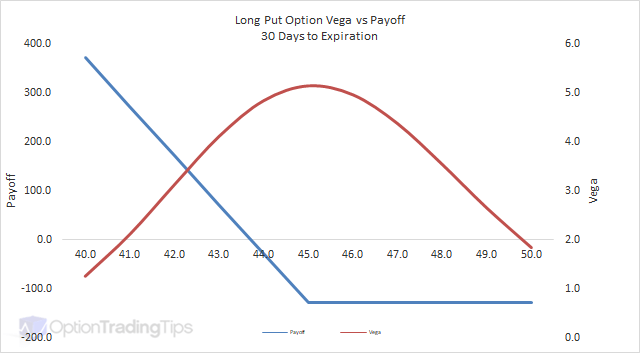
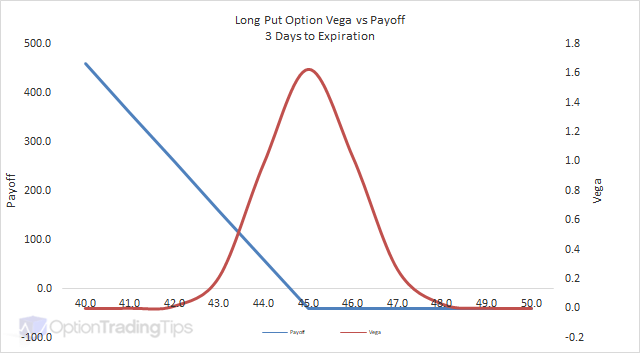
Vega
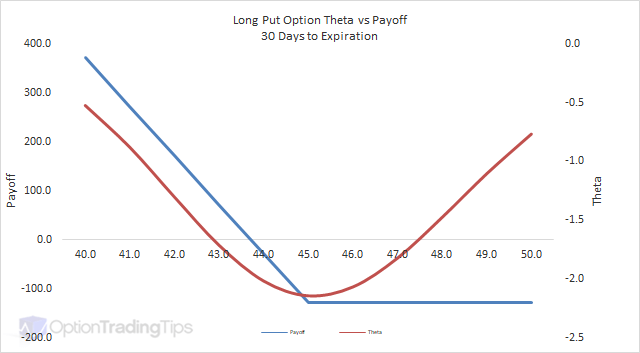
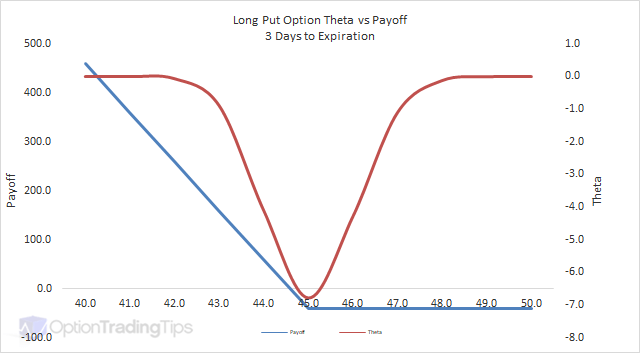
Theta
57 Comments
Peter September 7th, 2011 at 7:52pm
You can exit the trade whenever you like - not just when it hits the strike price. It depends on your view of the stock - if you think it will continue to trend lower, then hold onto it. Or maybe sell half of your position when it hits the strike and keep the rest open (if you have more than one contract on it that is).
Once the stock trades below the strike the delta (and hence your equivalent stock position) will start approaching -1 meaning that the lower the stock goes the more value your position will make or lose.
Bob September 6th, 2011 at 12:18pm
Thanks Peter!
If it helps, I'm using rounded numbers for GS stock price, which was 36 Friday and now is trending down to 32 or so at market open today.
My put is for a strike of 30, which we're now getting pretty close to. So I can take good profits now as it's dropped from 40 to 32 on my 30JanP.
What happens to my put if I keep holding if the stock goes below my strike price of 30 (since I still have several months till expiration)? As the stock price goes below my strike of 30, does that mean I keep making more profit as there is still someone on the other side of the trade (now buying a call up to 30)? Or is it best to get out once I reach the strike price?
Thanks again!
Peter September 5th, 2011 at 5:47pm
Hi Bob,
Hard to say exactly...it really depends on the market prices for those options at the those times. But I would say that a 25% OTM put option with 3 months to expiration (without knowing volatility of course) would be a very low priced option. At this point if my decision (again, without knowing the volatility) was to get out after a $5 move after one month or get out with 10 days to expire if the stock were to reach the strike, then I would take the later option for sure.
You can play around with these numbers yourself using my option pricing spreadsheet.
As you are the buyer of the option you have the ability to decide whether to exercise or not, so yes, you can hold onto the option as the stock price moves lower.
Bob September 5th, 2011 at 12:39am
I'm new to options trading and have a basic question. If I'm using a long put, current price is $40, and I buy a put for a strike at $30 in three months:
1. is it better to sell in one month's time if the price only drops to $35 (take returns and get out profitable essentially), or better to wait for it to hit strike price of $30 closer to the three months' option time? (assuming belief is that it will indeed continue to drop)
2. can I hold if the price continues to travel lower than my $30 strike price limit or would I have been required to sell at the strike price of the option?
Peter August 16th, 2011 at 7:27am
Sorry - I don't understand your question. Could you elaborate please?
hussain August 16th, 2011 at 2:15am
How I can differentiate put and call option under long and short term?
Peter December 8th, 2010 at 10:48am
It depends on what you're trying to achieve...are you talking about a call or a put?
kavitha December 8th, 2010 at 3:22am
I am beginner of option trading so I need to one clarification
which strike I sell & buy the option ex: nifty current level 5865
pl explain with example
Peter September 12th, 2010 at 10:03pm
The broker can't stop you exercising - it is up to the clearing corporation/exchange. In the US this is the OCC (Option Clearing Coporation).
Whether you are able to go "short" the stock can be up to both the broker (to manage client risk limits) and the regulators (US banning all short sales).
Stock borrow would not come into it because if you exercise your put you can just buy the stock in the open market at the going price and deliver it (sell) to the put option writer at the strike price (a stratch trade on the stock).
ken July 14th, 2010 at 2:31pm
I have been trying to get this answer If you buy a put and the stock is hard to borrow will the broker prevent you from exercising? or will they automatically cover the position at the close? or do they let you exercise and commit a naked short?
Add a Comment