Put Backspread
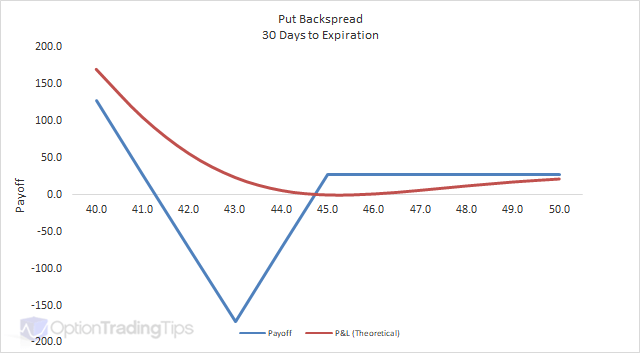
| B/S | Strike | Type | Price |
|---|---|---|---|
| Buy 2 | $43 | Put | $0.50 |
| Sell 1 | $45 | Put | $1.29 |
| Net Credit | ($29) | ||
A Put Backspread is buying two OTM puts for every one ITM put option purchased. Both options are in the same expiration.
The Max Loss is limited to the difference between the two strikes less the premium received for the spread.
The Max Gain is limited on the upside to the net premium received for the spread. Uncapped on the downside but strictly speaking limited as the stock cannot trade below zero.
Characteristics
When to use: When you are bearish on market direction and bullish on volatility.
This strategy could also be referred to as a Short Put Backspread, however, I will refer to this strategy simply as a Put Backspread.
A Put Backspread should be done as a credit. This means that after you buy 2 OTM puts and sell 1 ITM put the net effect should be a credit to you. I.e. you should receive money for this spread as your are short more than you are long.
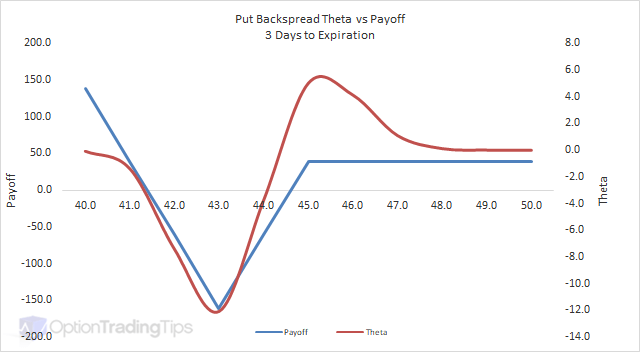
Put Backspread's are a great strategy if you are bullish and bearish at the same time, however, have a bias to the downside. Looking from the payoff, you can see that if the market sells off you make unlimited profits below the break even point. If, however, you are wrong about the direction and the market stages a rally instead, you still win - though your profits are limited.
You might say that this type of strategy is similar to a Long Straddle - and you would be right. The difference is that 1) the profits are limited on one side and 2) Backspread's are cheaper to put on.
Put Backspread Greeks
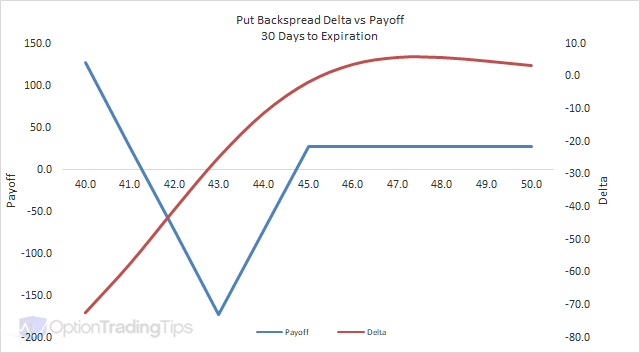
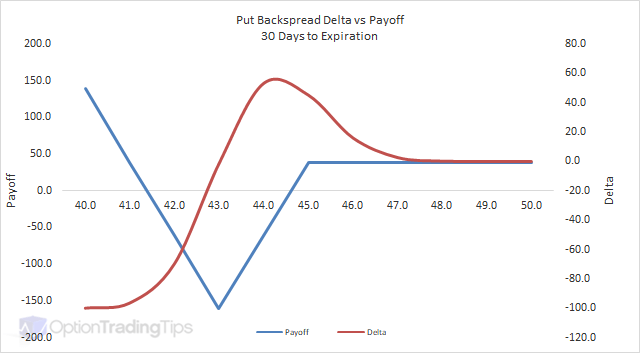
Delta
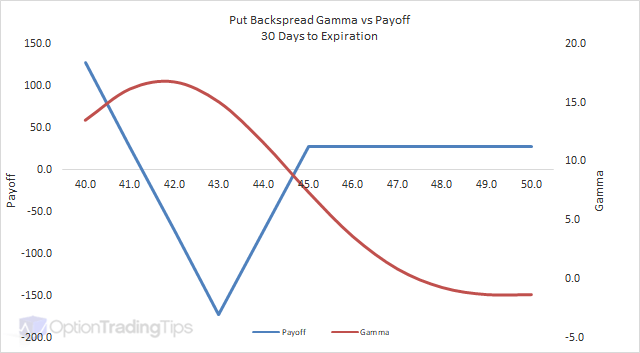
Gamma
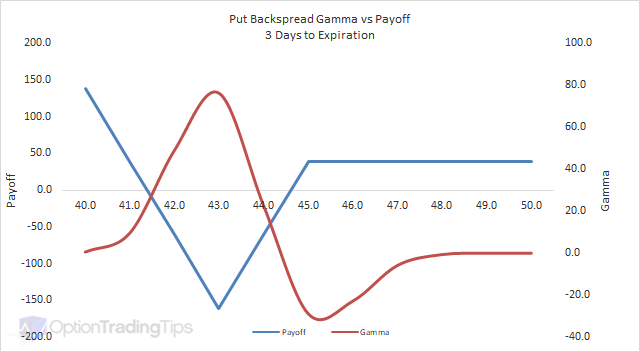
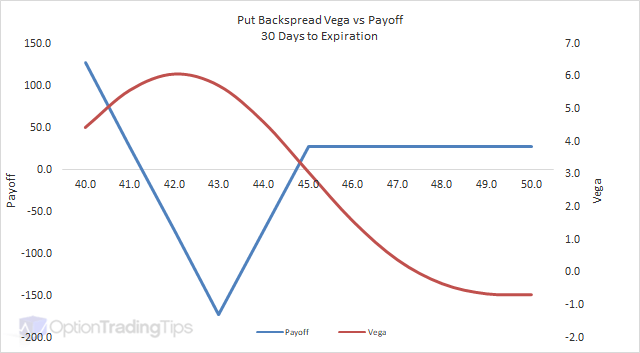
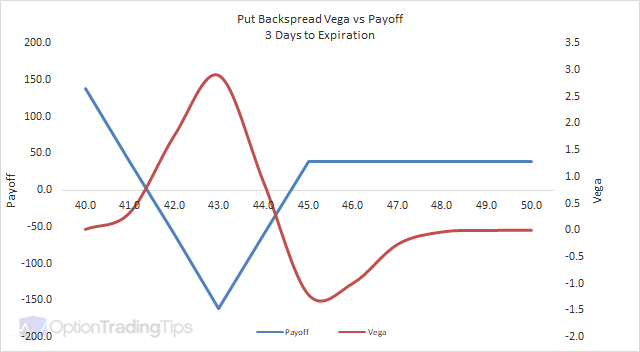
Vega
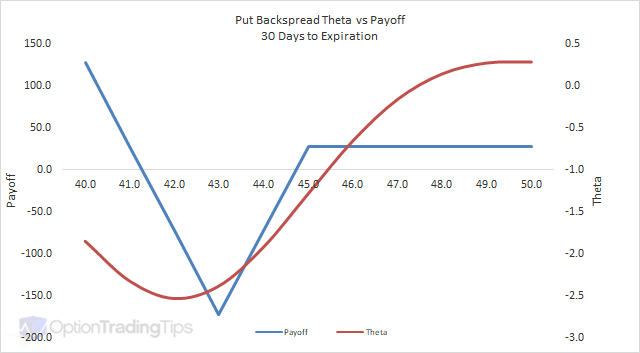
Theta
28 Comments
Peter March 28th, 2012 at 6:13pm
Is this on the NIFTY? What strikes and expiration date are you trading?
Azad March 28th, 2012 at 4:33am
Hi, Peter
I am using Put Back Spread in all my trade. I am expecting market to go down and infact market going down but still I am lossing big money, better to short in futures I think.
Peter March 26th, 2012 at 7:52pm
Hi Azad,
Sorry to hear of your losses!
Long option positions (including combinations) are negatively affected by the passage of time (time-decay), which is determined by the volatility.
So if you are planning on being long options (or long a combination of options) it is best to choose an underlying where the implied volatility is relatively low. If you buy options with a high volatility it can often happen that when the market moves in your favor the value change as a result of the decrease in volatility is greater than that of the gain due to price movements.
What underlying are you trading?
Azad March 19th, 2012 at 9:15am
Hi Peter,
Today I book losses half of my Put Back Spread position, Our markets are bearish for last one month but still I am losing money. I do every thing in this market but still I am not made any money rather I loss almost every thing I have and now I am in huge debt.I am very depress and don't know what to do, where I go .
Thanks
Peter March 5th, 2012 at 5:58am
Sounds like the market is not moving fast enough. Remember that with this position you are also fighting time decay - so if the market moves slowly then the decrease in volatility for the position will have a greater negative impact on your P&L than the market move itself.
Azad March 2nd, 2012 at 9:27am
Hi Peter,
One thing I am not understand, I am in this market since 2005 but never used this options strategy. I buy options earlier and always losing money, now after visiting your sites I try to used these complex strategy. Now I have three open positions {put back spread } here in our markets, two in nifty and one in SBI, both Nifty and SBI are gradually declining but I still losing money, why ?
Peter February 27th, 2012 at 5:15pm
Hi Azad,
If I am bullish I would look first at a call backspread. Bearish a put backspread. Neutral a long condor (also called iron condor if you use both calls and puts).
Azad February 27th, 2012 at 7:19am
Hi Peter,
Just tell me one thing ? out of all these option strategy's which one you personally prefer ? In other word when you are bearish or bullish which one option strategy's you used.
Peter May 1st, 2011 at 7:14pm
If you were to exit the trade, you would exit both legs at the same time. The timing, however, is up to you - if the position has made huge gains quickly you might want to exit immediately and move onto your next trade.
Ken May 1st, 2011 at 11:39am
Do you hold both legs of this until expiration, or close your positions before then? In other words when and how do you exit?
Add a Comment