Put Backspread
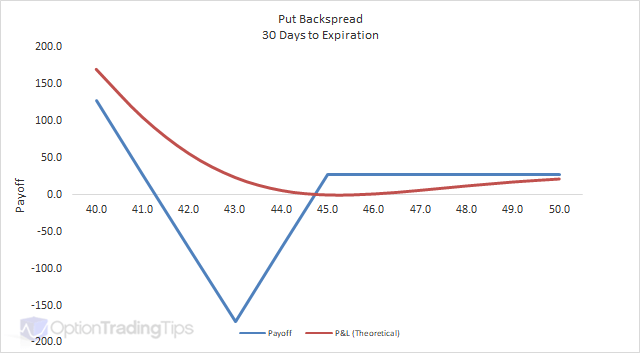
| B/S | Strike | Type | Price |
|---|---|---|---|
| Buy 2 | $43 | Put | $0.50 |
| Sell 1 | $45 | Put | $1.29 |
| Net Credit | ($29) | ||
A Put Backspread is buying two OTM puts for every one ITM put option purchased. Both options are in the same expiration.
The Max Loss is limited to the difference between the two strikes less the premium received for the spread.
The Max Gain is limited on the upside to the net premium received for the spread. Uncapped on the downside but strictly speaking limited as the stock cannot trade below zero.
Characteristics
When to use: When you are bearish on market direction and bullish on volatility.
This strategy could also be referred to as a Short Put Backspread, however, I will refer to this strategy simply as a Put Backspread.
A Put Backspread should be done as a credit. This means that after you buy 2 OTM puts and sell 1 ITM put the net effect should be a credit to you. I.e. you should receive money for this spread as your are short more than you are long.
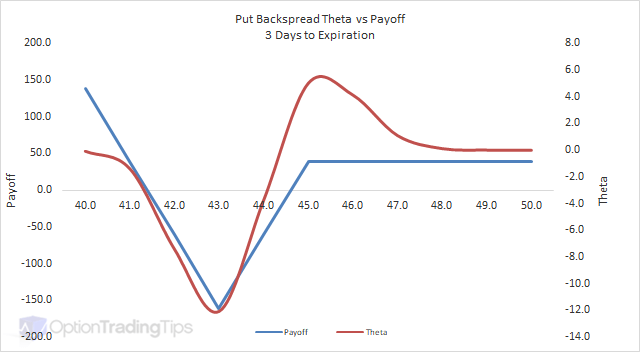
Put Backspread's are a great strategy if you are bullish and bearish at the same time, however, have a bias to the downside. Looking from the payoff, you can see that if the market sells off you make unlimited profits below the break even point. If, however, you are wrong about the direction and the market stages a rally instead, you still win - though your profits are limited.
You might say that this type of strategy is similar to a Long Straddle - and you would be right. The difference is that 1) the profits are limited on one side and 2) Backspread's are cheaper to put on.
Put Backspread Greeks
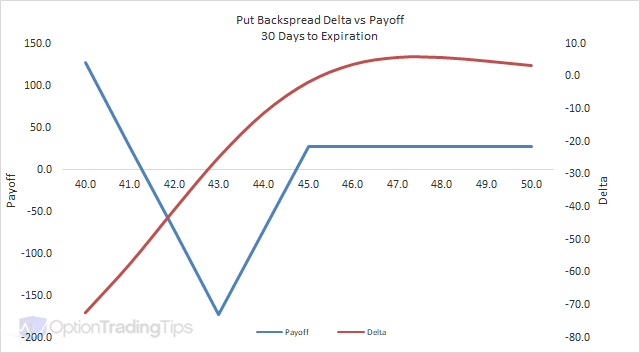
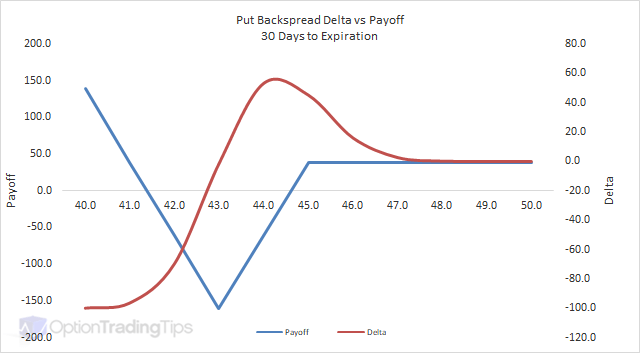
Delta
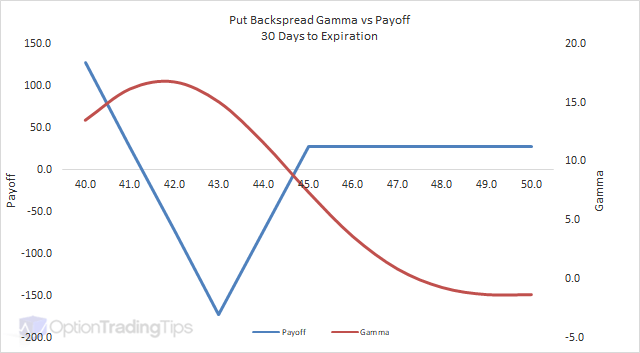
Gamma
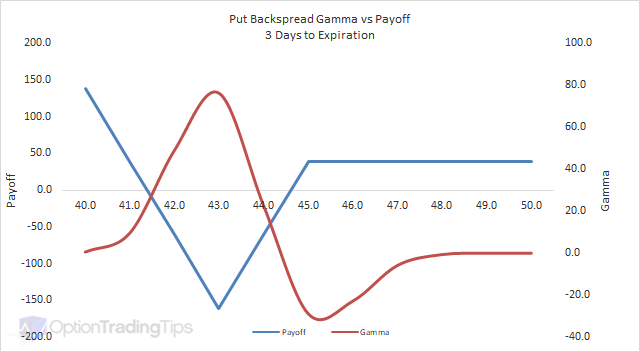
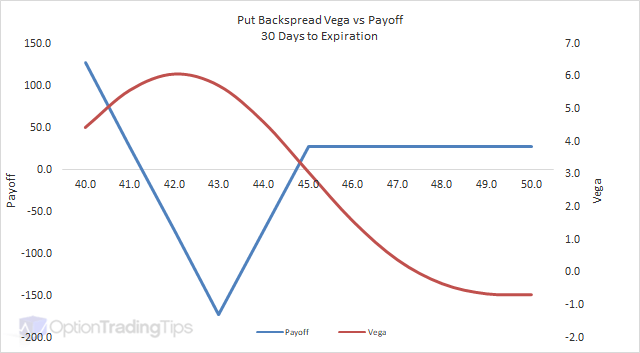
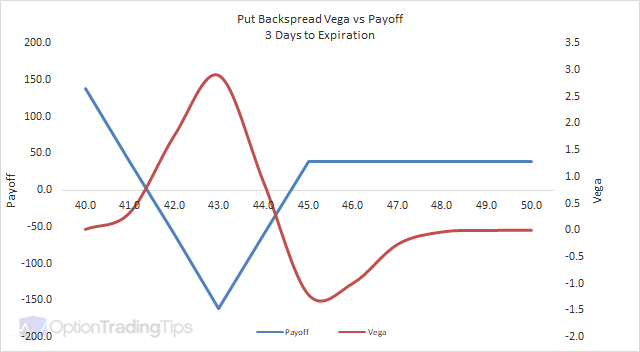
Vega
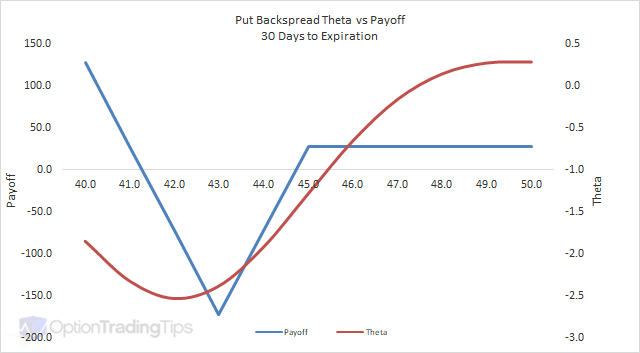
Theta
28 Comments
Peter January 19th, 2011 at 4:34pm
It is cheaper to put on as a put backspread is normally done for a credit i.e. you receive money in your account when this trade is established rather than paying out money.
It is similar to a long straddle because of the payoff profile. Not exactly the same as the payoff flattens on the upside, but similar all the same.
sonali January 18th, 2011 at 3:10am
how backspread is cheaper to put on....in put backspread n how long straddle n put backspread is similar
Peter September 2nd, 2010 at 5:47pm
Volatility of price is best described on the Volatility page.
adarsh September 2nd, 2010 at 7:26am
please define volatility of price
Peter September 1st, 2010 at 9:12pm
Hi Adarsh, a bear market defines a period where the prices of an asset are in a declining phase. Bear volatility defines a period where the volatility of prices are declining.
They do not necessarily happen at the same time. Many times, especially for equities volatility declines when the stock price rises.
adarsh September 1st, 2010 at 8:30pm
please explain the basic difference between bear market and bear volatility. i will greatful.
Peter August 12th, 2010 at 6:10pm
Buy Call = Right to Buy Stock
Sell Call = Obligation to Sell Stock
Buy Put = Right to Sell Stock
Sell Put = Obligation to Buy Stock
Emmanuel Armah August 12th, 2010 at 6:38am
please can someone explain the following terms to me.
buy CALL option
buy PUT option
Sell CALL option
Sell PUT option
I will be grateful .
BR.
emmanuel
Add a Comment