Short Call Options aka Naked Call
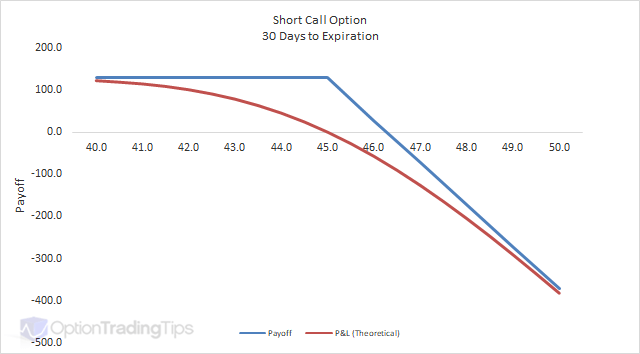
| B/S | Strike | Type | Price |
|---|---|---|---|
| Sell 1 | $45 | Call | $1.29 |
| Net Credit | ($129) | ||
A short call is simply the sale of one call option. Many refer to short positions as being "naked" the option. Selling options is also known as "writing" an option.
The Max Loss is unlimited as the market rises.
The Max Gain is limited to the premium received for selling the option.
Characteristics
When to use: When you are bearish on market direction and also bearish on market volatility.
A short is also known as a Naked Call. Naked calls are considered very risky positions because your risk is unlimited.
Short Call Option Greeks
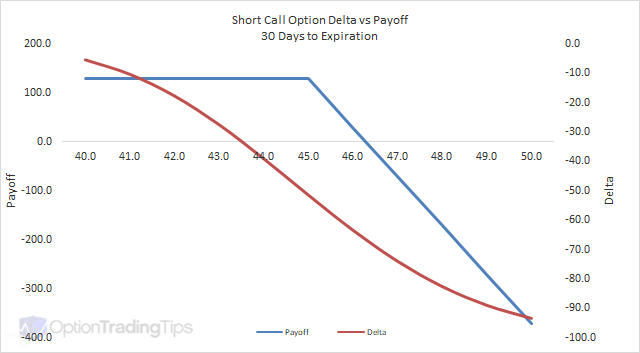
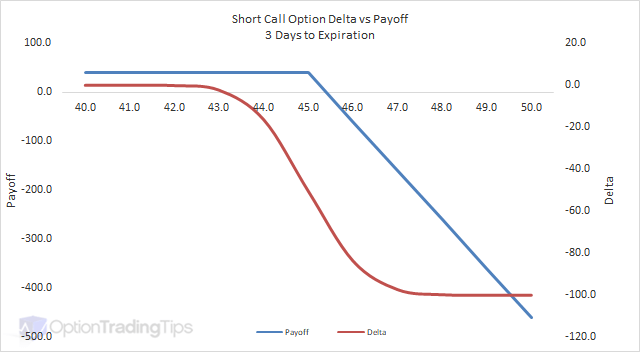
Delta
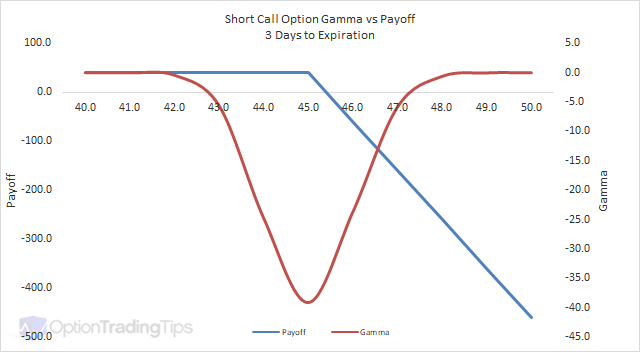
Gamma

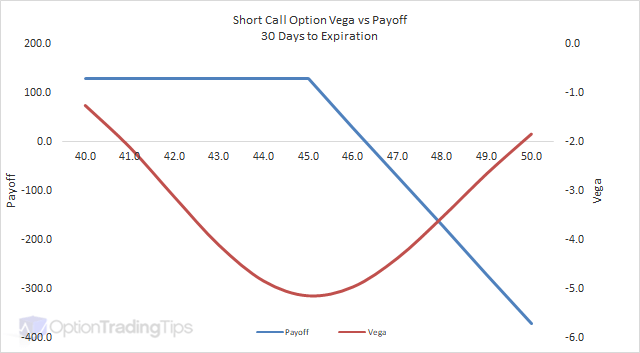
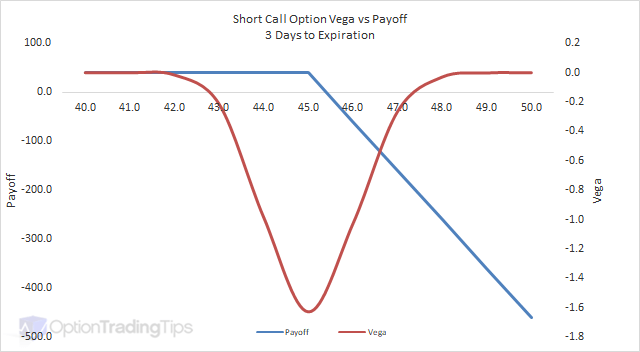
Vega
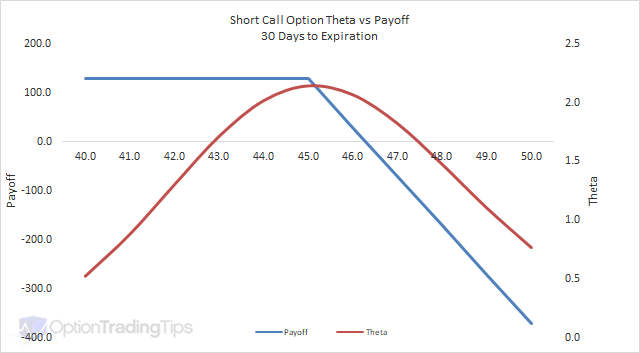
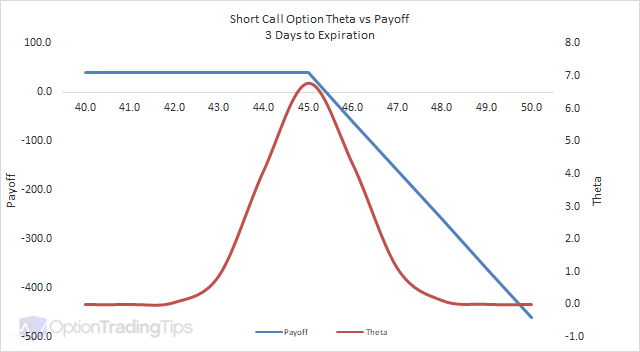
Theta
98 Comments
ronnie July 15th, 2011 at 12:31pm
If I don't close my naked call and at expiration the stock closes $20 above the $300 strike price, when it gets assigned to me will I be short the shares at strike price after paying the $20 loss or will my account be debited $320 per contract share?
Peter June 14th, 2011 at 11:13pm
Hi Eric, yep, short calls are very risky - especially on single stock options or commodity options where the potential for a large upside swings exist (takeovers etc).
Index options, however, are not prone to the same kind of upside price deviation so a short call strategy might be more appropriate for a speculator on index options.
Even though the payoff describes an unlimited loss profile, remember that you have the option to exit/adjust your position throughout the life of the trade. If you're short a call option and the market begins trading higher towards your short strike you can always exit the position with a small loss - you don't have to wait until the options' expiration and suffer a potential account breaker.
Eric June 14th, 2011 at 9:43pm
I was wondering why traders would ever short call when bearish rather than long put - it doesn't make sense to me conceptually about why a trader would put himself at unlimited market risk and limit his upside potential. Could you offer some insight on why speculators, not those who sell to hedge, would ever do that? Thanks.
ken February 28th, 2011 at 4:31pm
I have a trader who has 2 accounts and he because of different strategies in the different accounts he wants to long a spy call in one account and short the same in another. i understand that you cant do it in one account because then you would be flat. I think the example would be acct#1- long 3 spy 50 calls acct#2 long 3 spy 40 calls and short 3 spy 50 calls. I feel as if its something that cannot be done but i am not 100% sure
Peter February 12th, 2011 at 9:08pm
Mmm...hard to say. I read on the TradeKing site that it's approximately 17%, which was taken from the OCC annual report back in 2006. Not sure what today's figures are but I would guess somewhere in that vicinity. I'll email the OCC and let you know what I find out.
MIke February 11th, 2011 at 11:23am
How often would you say that in the money calls are exercised? In other words, If am short a call (but covered by a long call) and the underlying stock is trading moderately above the strike + any remaining premium, am I better off directly closing the spread by buying the short and selling the long or is it better to just wait for owner to exercise it. If I just close the spread, I am leaving money on the table but if I wait to late I may have trouble selling out of the long call at the last minute. What do you think?
Peter February 4th, 2011 at 12:01am
If you buy the same call back then there is no risk as you have closed out the position.
Troy February 3rd, 2011 at 10:12pm
If I short a call and then buy a call to cover is this position closed like stock would be or do I still have risk?
Peter January 31st, 2011 at 10:47pm
Hi Paul,
1. No. The expiration day is the last day that an option buyer may choose to exercise his/her options into stock.
2. When you buy an option, money is deducted from your account immediately to pay for it. If you allow the option to expire ITM then the profits from the increase in value will be debited into your account.
3. If you sell options so that you have an open short position, yes, your broker will ensure you sufficient funds are in your account for the position. This is what's called margin. It won't be the full exposure of the resulting position if you're exercised against - it will be an amount based on the risk of underlying asset. Most brokers will adopt the SPAN Margin method or the like for this.
Paul January 28th, 2011 at 7:51am
Thanks Peter.
A few more questions:
1. If I sell the option on the last day before it expires, can the option be exercised against me by the new buyer after the expiration date?
2. If an option is ITM and I let it expire, will the broker lodge the value of the option to my account? Will he include the profit it has made?
3. If I want to buy then sell options and not exercise them, will the broker insist that I have sufficient funds in my account to cover the potential exposure from a buyer exercising his rights? Is it possible to buy insurance rather than have the collateral in my account to protect myself against same?
Add a Comment